EBR April Literary Fiction

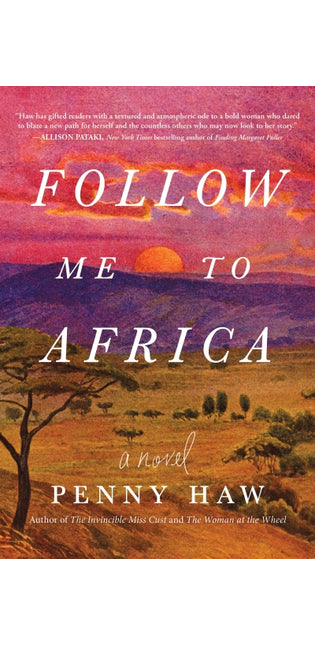
Follow Me to Africa
It's 1983 and seventeen-year-old Grace Clark has just lost her mother when she begrudgingly accompanies her estranged father to an archeological dig at Olduvai Gorge on the Serengeti plains of Tanzania. Here, seventy-year-old Mary Leakey enlists Grace to sort and pack her fifty years of work and memories. Their interaction reminds Mary how she pursued her ambitions of becoming an archeologist in the 1930s by sneaking into lectures and working on excavations. When well-known paleoanthropologist Louis Leakey commissions her to illustrate a book, she's not at all expecting to fall in love with the older married man. Mary then follows Louis to East Africa, where she falls in love for a second time, this time with the Olduvai Gorge, where her work defines her as a great scientist and allows her to step out of Louis's shadow. In time, Mary and Grace learn they are more alike than they thought, which eventually leads them to the secret that connects them. They also discover a mutual deep love for animals, and when Lisa, an injured cheetah, appears at camp, Mary and Grace work together to save her. On the morning Grace is due to leave, the girl—and the cheetah—are nowhere to be found, and it becomes a race against time to rescue Grace before the African bush claims her. From the acclaimed author of The Invincible Miss Cust and The Woman at Wheel comes an adventurous, dual timeline tale that explores the consequences of our choices, wisdom that comes with retrospection, and relationships that make us who we are, based on the extraordinary real life of Mary Leakey.
R 405.00
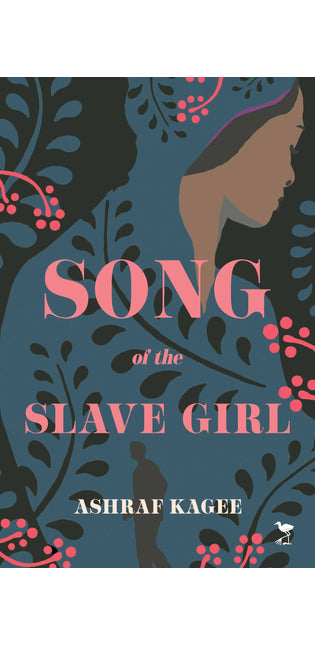
Song of the Slave Girl
“What’s your favourite food?” he asked.“Carrot and pea bredie” was the answer. But the answer was as irrelevant as the question. What each really wanted to know was, could you be loved? Could you be loved by me? If I opened my heart to you, would you fill it with wondrous things? If I gave my soul to you, would you make it soar to the heavens? And if I gave my body to you, would you give it the pleasures that I have only dreamed of? Set during the years of slavery in the Cape Colony, Song of the Slave Girl is a spellbinding tale of love and resistance. Meraj and Djameela, two young slaves, are bound by a powerful love and when Djameela is sold to a farmer, Meraj is consumed by grief. Djameela fends off the advances of her new master’s son and plots her escape. Desperate to reunite, the lovers take bold steps to find each other. Song of the Slave Girl explores the boundaries of love and freedom. Will love triumph, or will the lovers’ fight for freedom come at too great a cost?
R 310.00
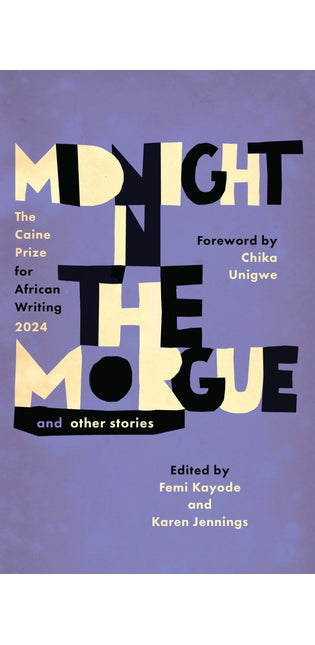
Midnight in the Morgue
An undocumented immigrant returns home after facing the indignities of the American dream working as a washer of the dead – only to be met with a tragedy. A child struggles to come to terms with the fate of their beloved one-eyed chicken Otuanya, who is treated as a family pet but is destined for the cooking pot. A family lives in fear of the dreaded Shadow Fever that haunts their town, keeping them trapped indoors after sunset lest they risk falling into an eternal sleep. From realistic explorations of family life, parenthood and infidelity to gritty noir and fantastical horror, the stories collected here are a testament to the endless imagination and possibilities of African literature. These witty, provocative and compulsively readable stories grapple with feminism, patriarchy, class and exploitation and showcase these writers as astute observers of life. This anthology is a generous feast of diverse, delectable narratives that offers something for everyone. Midnight in the Morgue also features three remarkable South African literary talents: Sibongile Fisher, Morabo Morojele, and Nadia Davids. Davids has the distinction of being the first South African to win the Caine Prize since Lidudumalingani Mqombothi in 2016. Her story, Bridling, about a conflicted early-career actress performing in a subversive theatrical production was hailed as ‘a triumph of language, storytelling and risk-taking‘by Chika Unigwe, Chair of Judges.
R 290.00